
Camp
  • The Deer Rut: Where to Watch Britain’s Wildest Autumn Spectacle

    Every autumn, Britain’s stags settle their differences the loud way. Here’s where to find the best of the action, from wild moorland to country estates, and how to watch it safely.

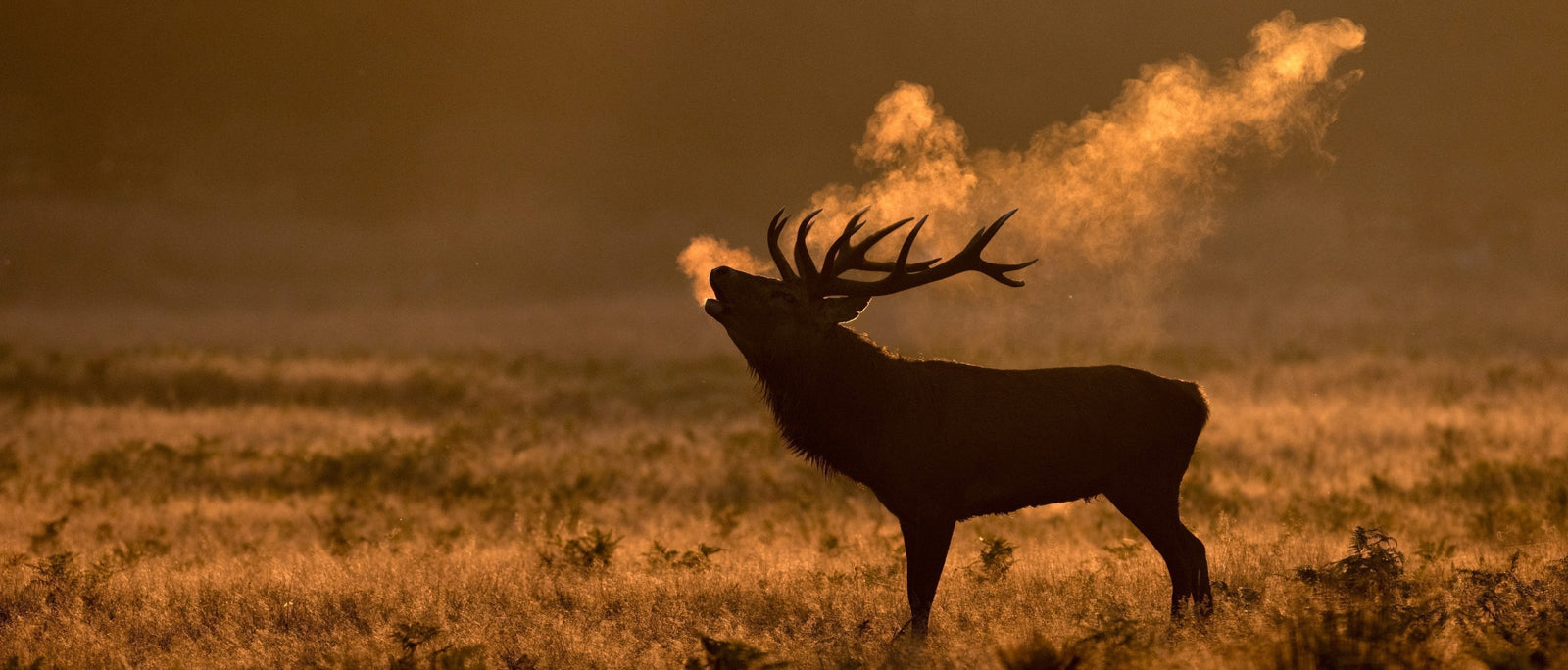
    Silhouette of a red deer stag at sunrise, head raised and antlers swept back, with a plume of breath glowing in the golden light. Photo by DreamsCanBe via Adobe Stock

    30th September 2026 | Words by Dave Hamilton


    You’ll hear it before you see it: a deep, guttural groan rolling across the hillside in the cold dawn air. Then two deer stags – the largest each around 150kg – lower their heads and charge, meeting with a crack of antlers that lands somewhere between a thunderclap and the sound of a cricket ball hitting the centre of a willow bat. You feel it in your chest. This is the autumn rut; one of the great shows of British wildlife. It traditionally peaks around 10th October. Here’s where to see it, and how to do it without getting skewered.

    Why do stags rut?

    Each autumn, stags rut to win the rights to mate with the female hinds for the coming season. For anyone lucky enough to witness this spectacle, the first signal it is about to happen normally comes via the ears: the deep bellow of a huge stag facing down his rival. These are the results of physical changes to young stags, akin to puberty in humans. But rather than getting pimples, a bumfluff beard, and a crippling phone addiction, the neck muscles of a young stag thicken, and the larynx and tongue change shape to allow their deep, throaty mating calls.

    Although stags reach maturity between one and three years old, the challengers and ultimate victor tend to be slightly older. Normally, rutting stags are mature males aged six or more years, occasionally up into their teens, depending on environmental factors such as the size of the herd.

    An earthy disguise

    Much of the stag’s activities are fuelled by an increase in testosterone. Sometimes the males scrape their antlers across the soil, picking up mud, ferns, and foliage in an effort to make themselves look bigger and more threatening. The stags will also often roll in their own urine. This is partly as a scent marker, as it is said to make the female deer more receptive to their advances – something which works well in a deer park but less so in a bar in Islington!

    Red deer stag with a mud-caked coat and muddy antlers walking across short green grass.

    Wet, muddy and entirely unbothered – the rutting stag’s idea of a grooming routine. Photo by Dave Hamilton


    Youthful advantage

    Whilst the largest, older alpha males are the ones competing for dominance of the herd, clashing antlers isn’t always the best strategy for ensuring their genes continue. The rut can be long and exhausting, and as the knackered, aggressive males recuperate from a day’s fighting, young bucks often sneak in and seize their opportunity to mate with the females.

    Red deer stag resting on the grass with its antlers draped in clumps of soil and turf.

    Even the biggest stags need a lie-down. The turf on those antlers is the evidence of a hard day’s posturing. Photo by Dave Hamilton


    When to see the deer rut

    The annual deer rut is synonymous with autumn; the dark nights begin to draw in, leaves change colour and fall from the trees, and most of us have an increased desire to cosy up on the couch with a hot chocolate or a wee dram. We tend to see the first signs of the rut from the middle of September. It peaks in October, continuing on into early or mid-November. However, wildlife experts tend to suggest that 10th October is the ideal time to see the rut.

    Time of day

    Rutting takes place mostly at dawn and dusk, but it’s not out of the question to see impressive displays at any time of the day. Red deer – Britain’s largest deer – are the most striking and likely to be the most active, but these are by no means the only deer that rut during the autumn months; fallow deer and sika too will rut during the autumn months.

    Two fallow deer bucks with heads lowered and antlers locked, sparring on wet grass in light rain.

    Fallow bucks lock antlers in the rain. They’re smaller than red deer, but no less committed. Photo by Andrew via Adobe Stock


    Safety first

    It should go without saying that coming between two 150kg males, pumped up on testosterone, armed with sharp, spiked antlers and necks like tree trunks, is about as safe as walking out into a main road with a blindfold on. I would recommend finding a deer park where the males are safely behind a large fence. That way, you are far less likely to be charged by their rib-breaking antlers. Dog walkers should keep their dog on leads at all times during the rut.

    The other, and most practical, option is to drive and remain in your car. Deer didn’t evolve with a four-door saloon as a natural predator, and it is unlikely they will see you as a threat if you remain inside one. You will be able to get fairly close in a car, but again, do not get between two males unless you want a serious remodelling of your BMW 3 series. Try not to get between females and their young either, as they understandably can get very protective.

    Instead, stay at least 100m away, downwind of any aggressive males. Armed with a decent pair of binoculars or a camera fitted with a good zoom lens, you should be able to see and hear everything you need to.

    As tempting as it might be, it is important not to try and encourage the deer towards you with food. Not only are they wild animals, meaning they are inherently very unpredictable, feeding them can also spread disease amongst the deer population.

    Silhouette of a red deer stag at sunrise, head raised and antlers swept back, with a plume of breath glowing in the golden light.

    A stag bellows into the cold dawn air, his breath hanging in the first light. Photo by DreamsCanBe via Adobe Stock


    Where to see the deer rut

    The stag rut can be observed wherever there are large populations of deer. This can be national parks such as Exmoor and the Cairngorms, or large country estates with deer enclosures.

    1. Ashton Court Estate, Bristol

    Follow signs to the mansion house through the Ashton Court estate and park in the public car park. For the red deer, follow the road downward towards the university campus and look to your left. The deer enclosure will be behind the black metal fencing to the right of the road. Fallow deer can also be seen up past the mansion house in their own separate enclosure. Find out more

    2. Longleat Estate, Wiltshire

    Perhaps the best choice for those with a young family, as the deer enclosure lies adjacent to the ever-loveable monkey enclosure. There is an entrance fee to the park, but this will allow you to ride the train and play in the extensive park – you can even let your children do the same. Find out more

    3. Exmoor, Somerset/Devon

    Exmoor is synonymous with red deer. The deer roam freely, so there are no real fixed places where you will definitely see the deer, and there is an element of luck. However, sightings occur most frequently in the moors around Exford, Withypool, Horner Wood, and Dulverton. Find out more

    4. Richmond Park, London

    There are more than 900 free-roaming deer in Richmond Park and nearby Bushy Park, which makes it one of the best places within the M25 to see the rut. The fields around Sawyer’s Hill and Roehampton Gate are some of the most reliable places to spot the deer. Find out more

    5. Bradgate Park, Leicestershire

    With a wide, hilly, open landscape, Bradgate can be one of the best places to observe the stag rut on foot rather than in a vehicle. It’s advised you never get within 50-100 meters of the animals, and if in doubt, you can go on one of the deer rut experiences led by experienced staff. These do sell out, so it’s worth keeping an eye on the website and booking well in advance. The park can get very busy during the rut, so try and arrive early in the day before the crowds. Find out more

    6. Studley Royal Park, North Yorkshire

    A good place to spot fallow, red, and sika deer, you’ll find over 300 individuals in the park. The National Trust publishes a circular walk on their website which starts and ends at the visitor centre. Find out more

    7. Dinefwr Park, Carmarthenshire, Wales

    You’ll find a population of a little under 100 fallow deer at the National Trust-run Dinefwr estate. This 800-acre estate is both a SSSI and was the first parkland nature reserve in Wales. Aside from stags, there are populations of otters, polecats, and voles roaming the estate, so it’s a good place to see a range of wildlife both big and small. Find out more

    8. Glencoe, Scotland

    Look for wild populations of red deer around Balmacara and Loch Alsh, in Glen Etive and the Mar Lodge Estate, and the moors around the National Trust-owned Mar Lodge. As with many wild populations, it’s best to come early in the morning if you want to get that elusive photo of the fighting males. Find out more


    Dave Hamilton is a writer, photographer, forager and explorer of historic sites and natural places. He is the author of multiple books, including "Where the Wild Things Grow: the Foragers Guide to the Landscape", “Wild Ruins” and “Wild Ruins BC”. His latest book, “Weird Guide Britain”, published by Wild Things Publishing, came out in May 2026.

    Website Twitter

    Vollständigen Artikel anzeigen

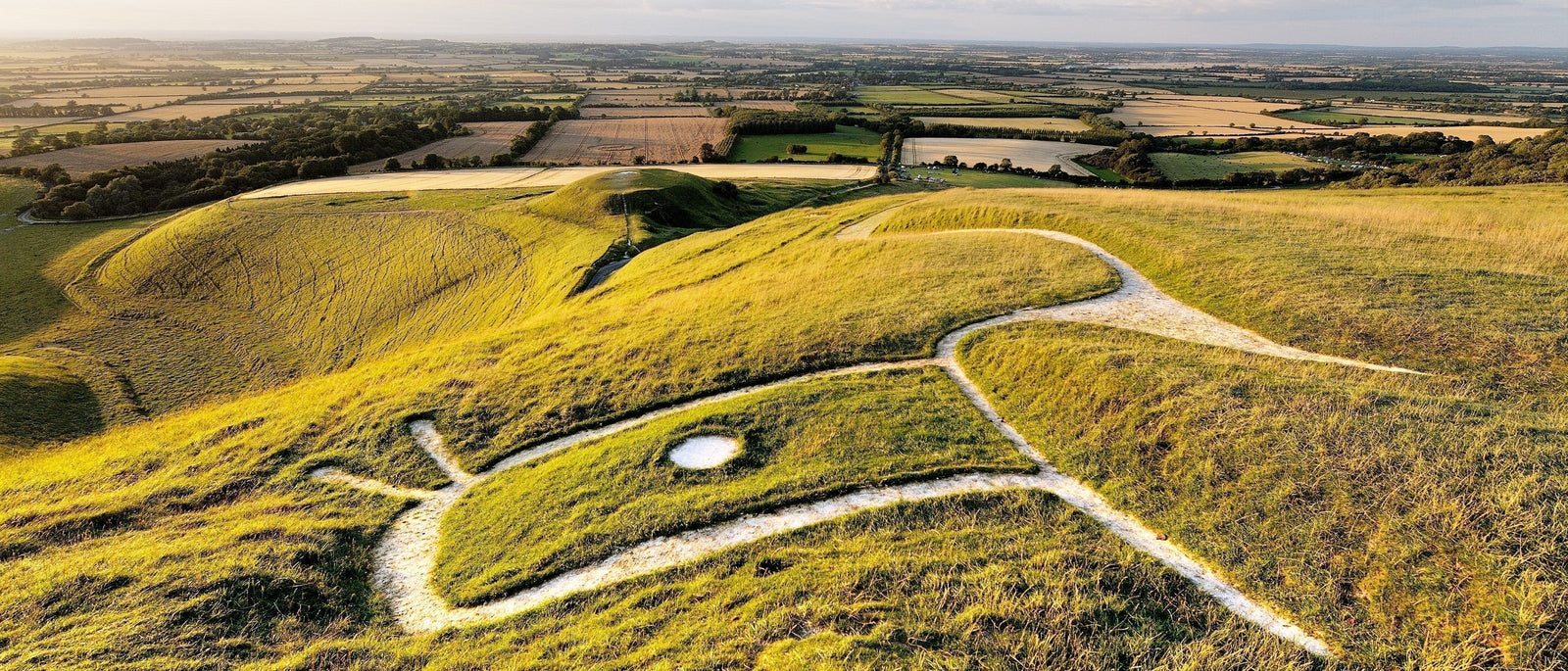
    Uffington White Horse. Prehistoric Bronze Age chalk hill figure Oxfordshire, England. Close up over head, eye, ears and neck. By David Matthew Lyons via Adobe Stock.
    Ein Spaziergang in andere Welten | Großbritanniens echte Fantasy-Schauplätze

    Von einem in einen Hügel in Oxfordshire gemeißelten Kreidepferd bis hin zu einem mit bemalten Kieselsteinen übersäten Strand in Pembrokeshire – Großbritannien ist voller Orte, an denen reale und imaginäre Welten aufeinandertreffen. Hier sind sechs Orte, die einige der größten Fantasy-Autoren der Literatur inspiriert haben.

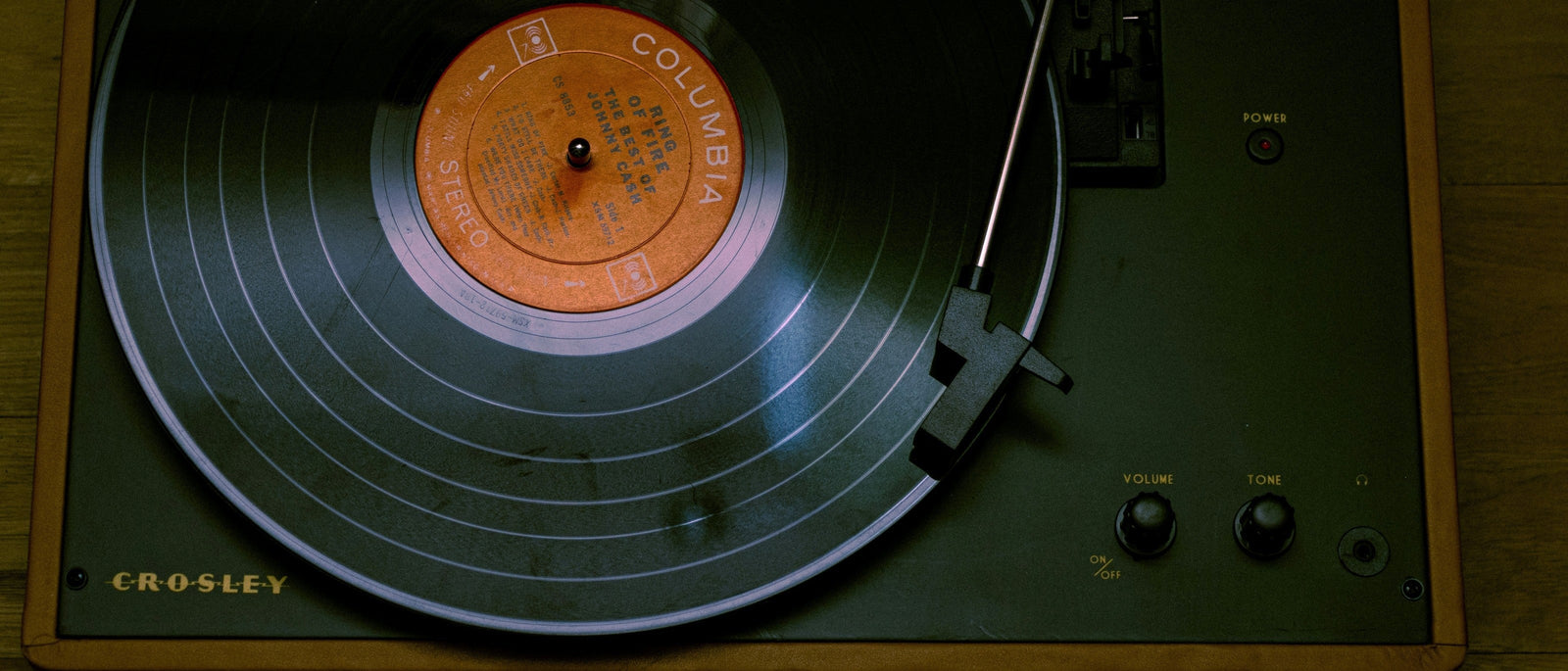
    Close-up of a vintage Crosley record player with a Columbia Records vinyl playing, shot from above on a warm wooden surface
    Die ultimativen „Log Cabin“-Alben: 10 LPs, mit denen man sich in den Wald zurückziehen kann

    Regen prasselt auf das Dach, ein Hauch von Holzrauch liegt in der Luft, und weit und breit kein Handyempfang – unserer Meinung nach sind dies die zehn Alben, die in jeder Hütte mitten in der Wildnis direkt neben dem Plattenspieler stehen sollten.

    Tweed Valley Mountain Rescue Team carrying out a difficult stretcher rescue in the teeth of a storm. Photo by Steve Penny courtesy of Tweed Valley MRT.
    Into The Storm | Eine kurze Geschichte der britischen Bergrettung

    Sie rücken aus, wenn alle anderen umkehren, sie arbeiten umsonst und sagen niemals nein. Dies ist die bemerkenswerte Geschichte unserer Bergrettungsmannschaften - und warum es an der Zeit ist, sie angemessen zu würdigen.