Camp
  • Trekking Poles Explained: The Ultimate Buying Guide
    More speed, more stability, less strain on your knees – just three good reasons why experienced long-distance hikers almost always use trekking poles. Here’s everything you need to know before buying a pair.

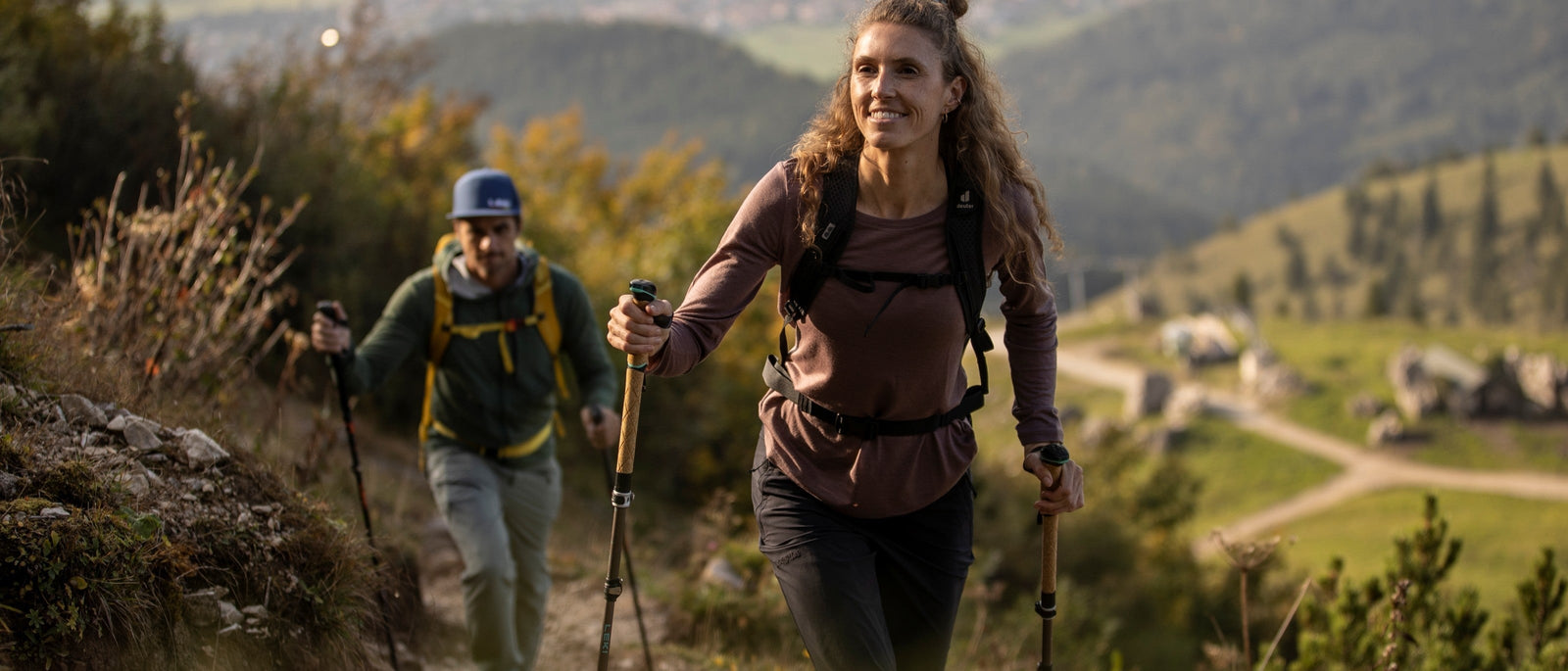
    Two hikers ascending a grassy hillside trail using trekking poles for support on the climb.

    10th September 2026 | Words by Matt Jones @ WildBounds HQ


    Watch an experienced long-distance backpacker moving through the hills and there’s a good chance they’re using trekking poles – not as a concession to age or injury, but because they genuinely make the miles easier. Alpine guides and Nordic walkers have known this for decades, but it’s taken a while for most Brits to adopt them. In recent years however, poles have finally gone from niche accessory to standard kit for anyone serious about multi-day trips, especially if tackling technical mountain terrain, or simply wanting to cover more ground with less fatigue.

    Admittedly, there are still some walkers who see them as unnecessary faff, or something you only reach for once your knees start creaking. That’s a shame, because there’s solid scientific evidence for using poles. Choosing the right pair – in the right material, with the right grip, sized correctly for you – makes a bigger difference than most people realise.

    This guide covers why poles work, the physiological evidence behind the claims, the key differences between the types and materials on the market, and how to size, hold and use them properly, whether you’re walking a UK coastal path or an Alpine trail. We’ll finish with a quick FAQ covering a few things that don’t fit neatly anywhere else.

    Hiker using Silva trekking poles on a coastal cliff path, demonstrating pole support on uneven terrain

    Whether it's a coastal path or a mountain switchback, the right poles make the going easier.


    Why Use Trekking Poles? The Evidence

    The case for trekking poles isn’t just marketing. A reasonable body of biomechanical research backs up the main claims, though it’s worth understanding what the evidence actually shows rather than the more strident claims you’ll sometimes see online.

    Less strain on your knees, especially downhill

    Descending is harder on your joints than climbing: the compressive forces travelling through your knees when walking downhill can be three to four times greater than on level ground. Lab-based studies measuring this directly have found that pole use reduces peak compressive and shear forces at the knee by somewhere in the region of 12 to 25 per cent, along with a reduction in the power your ankle and knee joints have to absorb on each step. Over a long descent, or a multi-day trek with thousands of accumulated footfalls, that reduction adds up.

    Better balance and stability

    Two extra points of contact with the ground make an obvious difference on uneven, wet or loose terrain – stream crossings, broken scree, tree roots, icy patches. This translates into improved confidence and stability underfoot, and several studies link pole use to a reduced risk of ankle injury on the trail.

    Rhythm, propulsion and versatility

    On flatter ground, planting and pushing off with poles gives you a small forward propulsion boost and helps maintain a steady rhythm, particularly useful with a loaded pack. Poles also double up in various outdoor scenarios: as supporting poles for trekking-pole tents and tarps, saving the weight of a separate pole set, and as a way to test the depth of bogs and murky puddles before you commit a boot to it.

    Trade-offs

    Of course, it’s worth being honest about the other side of the coin. A 2023 review of pole use across various sports found that while poles reduce the load on your legs, they increase the overall cardiovascular and metabolic demand of walking, because your arms, shoulders and upper back are now sharing the workload. In practice, this usually means you can hike further and longer with less leg fatigue, at the cost of a bit more effort elsewhere and a slightly higher heart rate for the same pace. Plus, if you’re hiking for exercise, this means that using poles also gives you a better all-body workout, engaging more of the major muscle groups.

    Hiker folding a Z-fold trekking pole into its stuff sack at a mountain summit, showing the collapsible design.

    Z-fold poles collapse down small – ideal when you need to stow them inside a pack for scrambly sections of technical mountain routes.


    Types of Trekking Poles: Telescopic vs Folding (Z-Pole)

    Trekking poles come in three main variants: Telescopic poles use two or three sections that slide inside one another and lock at your chosen length, using either an external lever clamp or an internal twist mechanism. They’re the most common, most adjustable, and generally the most affordable option. Folding (or Z-pole) poles use shorter, fixed-length sections joined by an internal shock cord, similar to a tent pole, folding flat into a compact bundle before locking straight for use. They’re prized by trail runners and fastpackers for their packability and low weight, though most only offer a small range of length adjustment via a short telescopic top section. Fixed-length poles, with no adjustment at all, are light yet durable, with very few failure points. They’re generally the preserve of the ultralight fastpacking and trail running crowd, being less relevant for most UK hillwalkers. We stock a decent range in our running poles collection.

    Feature Telescopic Folding (Z-Pole)
    Adjustability Full range, easy to fine-tune Limited (usually one short section)
    Packed length Longer, bulkier Very compact, folds away small
    Weight Slightly heavier on average Usually lighter
    Robustness Simple, field-serviceable Fewer moving parts, but harder to fix if the internal cord fails
    Best for General hiking, backpacking, varied terrain Trail running, fastpacking, minimalist kit
    Price Wide range, generally lower Tends to sit at the pricier end

    Materials: Aluminium vs Carbon Fibre

    Shaft material is the next big decision, and it’s mostly a trade-off between weight and resilience. Aluminium poles (usually a 6000 or 7000-series alloy) are generally heavier, but that weight buys genuine toughness: under serious stress, aluminium tends to bend rather than snap, which means a bent pole can often be bent back into a usable shape in the field. Carbon fibre poles are lighter and better at damping vibration, which some hikers find noticeably more comfortable over a long day. The trade-off is that carbon is a less forgiving material under sudden, sideways stress: rather than bending, it’s more prone to shattering outright, particularly if wedged awkwardly between rocks. For general UK hillwalking, where poles often catch on rocks, gates and awkward terrain, this is worth weighing up against the weight saving.

    Feature Aluminium Carbon Fibre
    Weight Heavier Lighter (often 20–30% less)
    Failure mode Bends under stress (often fixable) Can shatter or splinter under sudden lateral load
    Vibration damping Average Better
    Cost Generally cheaper Generally more expensive
    Best for Rocky, technical UK terrain; budget-conscious buyers Long-distance backpacking, trail running, weight-focused set-ups

    Grips: Foam, Cork or Rubber?

    The grip is the part of the pole you’ll actually feel for hours at a time, and so material choice matters more than it might seem. Foam grips are soft, lightweight and absorb sweat well, making them a comfortable all-rounder, though they wear faster than the alternatives. Cork grips mould to the shape of your hand over time, wick moisture from sweaty palms, and dampen vibration nicely, which is why they’re a popular choice for warm-weather and long-distance use. Rubber grips insulate your hands from cold and vibration, making them well suited to winter use and gloved hands, but they can chafe or cause blisters on warm, sweaty palms during summer hiking.

    Material Pros Cons Best for
    Foam Lightweight, absorbs sweat, cheap to produce Wears down faster, less durable General use, budget poles
    Cork Moulds to your hand, wicks moisture, dampens vibration Can crack or wear over years of heavy use Warm weather, long days, sweaty hands
    Rubber Insulates against cold, cushions vibration Can chafe or blister in warm weather Winter use, gloved hands

    Hiker's hand gripping a trekking pole on snow and glacier terrain, illustrating alpine pole use.

    Ergonomic trigger-style grips can aid overall comfort, especially when trekking for multiple days.


    Other Features

    A few other details are worth checking before you buy: Locking mechanisms on telescopic poles are usually either an external lever, which clamps down on the shaft and is quick to use even with gloves on but can loosen over time and need an occasional tightening screw adjustment, or an internal twist lock, an expander mechanism that’s simple and low-profile, though slightly slower to adjust on the move and more prone to slippage/failure over time. Baskets, the small discs near the tip, stop the pole sinking into soft ground; the small baskets fitted as standard are fine for most UK trails, but larger snow or mud baskets are worth swapping in for boggy moorland or winter conditions. Tips are usually tungsten carbide for grip on rock and ice, with a removable rubber cap to protect the tip – and the ground, and other people’s gear – when not on technical terrain. Wrist straps, when used correctly, take real weight off your grip: thread your hand up through the bottom of the loop before gripping the handle, so the strap supports your wrist rather than you simply gripping the pole tightly. A minority of poles also feature an internal spring for shock absorption, cushioning the jolt on hard descents, usually with a switch to disengage it for uphill use, where the spring effect just wastes energy.

    Close-up of a hand gripping a cork trekking pole handle with the wrist strap threaded correctly from below.

    Thread your hand up through the loop of the strap before gripping the pole, as shown here.


    Sizing Your Poles

    Getting the length right matters more than any material or feature choice. The standard rule of thumb is as follows: stand on flat ground (wearing your preferred hiking boots or trail shoes), hold the pole with the tip touching the ground close to your foot, and your elbow should form roughly a 90-degree angle. As a general starting point based on user height:

    User Height Approx. Pole Length Required
    Under 155cm (5ft) 100cm
    155–170cm (up to 5ft 7in) 110cm
    170–180cm (up to 5ft 11in) 120cm
    Over 180cm (6ft plus) 130cm

    Most telescopic poles adjust across a wide enough range to suit most heights, so treat this as a starting point rather than a fixed rule, and fine-tune using the elbow test above. If you’re between sizes, or plan to use your poles on steep ascents and descents, err towards a model with a longer maximum extension rather than a shorter one.

    Hiker adjusting the length of a Silva trekking pole using the flick-lock mechanism on a coastal trail.

    Most telescopic poles adjust across a wide range to suit multiple user heights, and flick-lock mechanisms enable quick, fuss-free adjustment on the fly to suit steep ascents and descents.


    How to Use Trekking Poles: Grip, Ascents and Descents

    Getting the technique right makes a bigger difference than most people expect. On flat or undulating ground, keep your poles at your standard 90-degree-elbow length, and aim for a natural rhythm: plant the pole roughly level with, or just behind, the opposite foot, in the same way your arms would swing naturally without poles.

    On sustained ascents, shorten each pole by around 5 to 10cm. This gives you more leverage lower down the slope and stops you needing to reach up awkwardly with each plant; if your shoulders feel like they’re being pushed up towards your ears, shorten the poles further. You may also want to choke down on the pole when climbing; many poles feature lower grip extensions down the shaft to allow this.

    On sustained descents, lengthen each pole by a similar 5 to 10cm from your standard setting. This keeps your body more upright and lets the pole take weight earlier in the step, which is exactly where the knee-saving benefit discussed earlier comes from.

    On a long traverse, you can even shorten the uphill pole and lengthen the downhill one, adjusting as the gradient changes. And don’t forget the strap technique above: a properly adjusted strap means you can relax your grip almost entirely between plants, saving a surprising amount of energy in your hands and forearms over a full day.

    Popular Poles We Stock

    We carry a solid range of both walking poles and running poles across the spectrum in terms of price and performance.

    Budget: The Silva Trekking Poles Alu are a classic 7075 aluminium telescopic pole with a secure flick lock, extended cork handles and Silva’s ‘Blueberry’ quick-release strap system, plus a superb range of adjustment to fit any user height, all for under £60 – a dependable, no-frills way to try poles for the first time.

    All-rounder: The Leki Khumbu Lite AS sits in the mid-range of Leki’s line-up: heat-treated aluminium, a 35cm adjustment range (100–135cm), the reliable Speed Lock plus system and an Aergon grip that suits everything from a day walk to a full mountain trek.

    Fast and light: For minimalist speed, the Leki Skytera FX.One SL is a fixed-length carbon pole with a push-button fold and a Verticon grip, weighing just 158g. If you’d rather keep some length adjustment in a compact package, the Leki Cross Trail FX Superlite Carbon Compact is a Z-folding carbon pole (100–120cm) built with shorter hikers and trail runners in mind. Taller users should go for the Leki Cross Trail FX Superlite Carbon instead, which offers an additional 10cm in maximum length, from 110–130cm.

    Two fast hikers with superlight trekking poles moving fast across a mountain ridge in the Dolomites.

    The lightest poles, typically made from carbon fibre, are a good option for fast-packers and hikers looking to pick up the pace.


    Robust all-season: In aluminium, Silva’s All Season Alpine poles use reinforced 7075 aluminium and wider-diameter shafts for snowshoeing, ski touring and full alpine use, adjusting up to 145cm with snow baskets included. In carbon, the Leki Sherpa FX Carbon Strong is the brand’s most robust folding pole, with enlarged 20mm upper sections and a rubberised grip back built for winter conditions.

    Compact and packable: The Silva Carbon Z-Fold trekking poles fold down to just 38cm while still adjusting from 115 to 135cm, giving you genuine packability without giving up length adjustment.

    Frequently Asked Questions

    Do I really need two poles, or will one do?

    Two. A single hiking staff can help with balance on gentle, flat terrain, but you lose the load-sharing benefit on the side without a pole, and most of the biomechanical research behind trekking poles specifically looked at pairs used together.

    Can trekking poles damage the countryside?

    Used carelessly, yes: metal tips can scar rock, chip flagged footpaths, and damage tree roots. Fit rubber tip protectors on popular, well-maintained paths, and avoid deliberately gouging soft ground.

    Can I take trekking poles in hand luggage on a flight?

    No, not in the UK. Walking and hiking poles are specifically listed as prohibited in hand luggage by the UK government, regardless of tip type, and need to go in the hold. Check your airline’s specific baggage policy too, as some have additional restrictions on packed pole length.

    How much should I expect to spend on a decent pair?

    You can get a perfectly serviceable aluminium pair for well under £50, and most hikers won’t need to spend more than £80 to £120 for a genuinely good set. Carbon fibre and folding designs tend to sit higher, from around £100 up to £200-plus for the most technical options.

    Will an old wooden walking stick or found stick do the job instead?

    For a gentle, occasional walk, sure. But you’ll miss out on the adjustability, the ergonomic grip and strap, and the lighter weight that make a genuine difference on longer or more technical days, and a stick won’t come as a matched pair for even, symmetrical support.

    How do I look after my poles?

    Wipe down and dry the shafts after wet or muddy trips, particularly around telescopic joints, to stop grit working its way into the locking mechanism. Loosen twist-lock sections slightly before long-term storage to avoid them seizing, and check lever locks periodically for wear.


    Vollständigen Artikel anzeigen

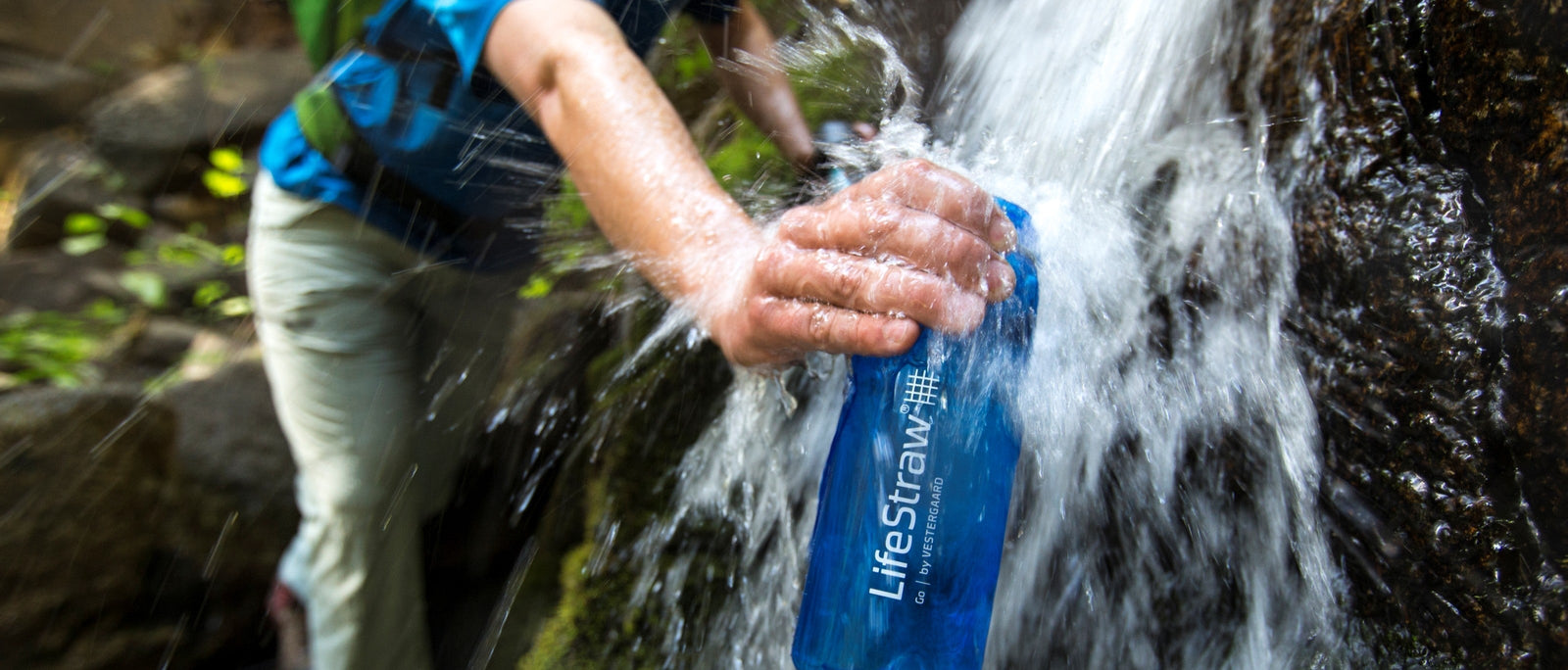
    Hand filling a LifeStraw Go filter bottle from a cascading waterfall. Wild water is everywhere in the hills – the trick is knowing what's in it.
    The Ultimate Guide to Filtering & Purifying Water

    Turbidity, parasites, bacteria, viruses and chemical pollutants – there are five reasons that innocent-looking stream might make you ill. Here’s what can lurk in wild water, and how to make sure it’s safe to drink.

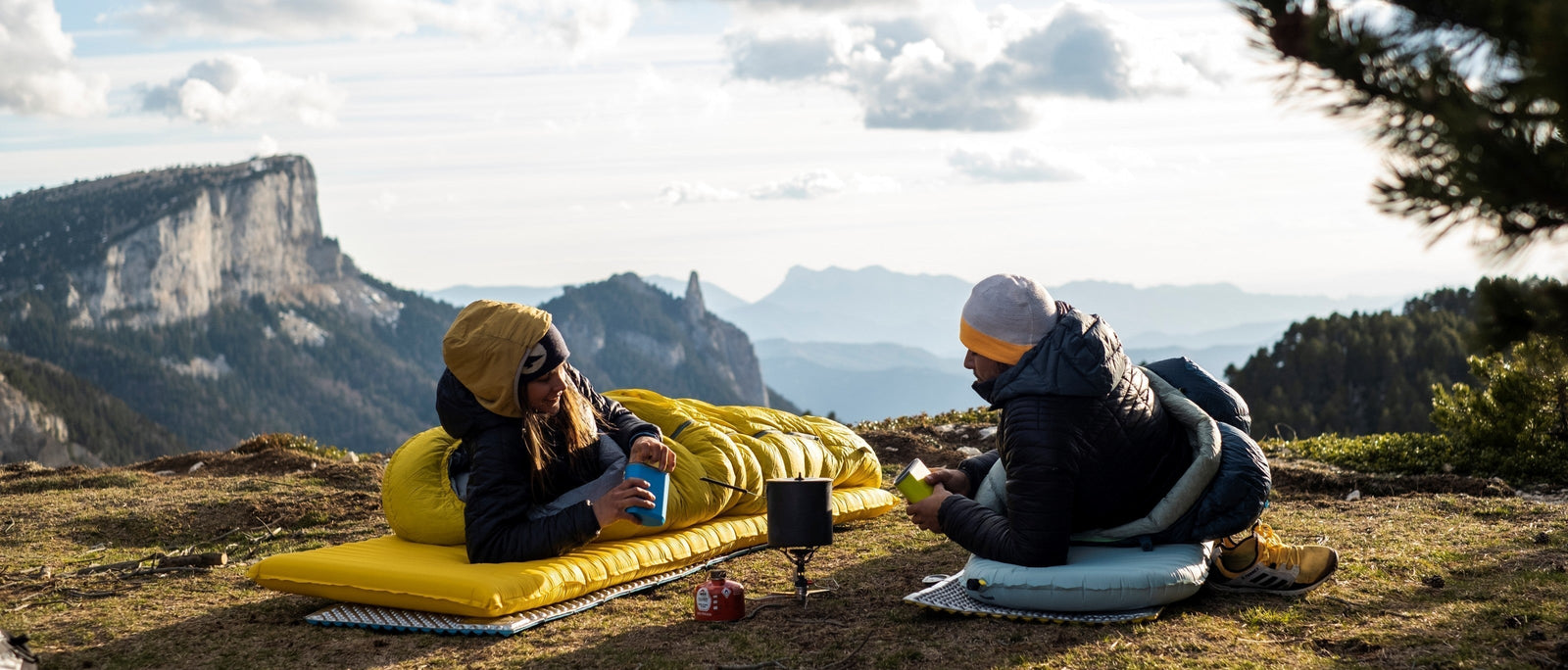
    A man and a woman lying on sleeping mats and bags on an open hillside, with a dramatic mountain cliff and wide alpine valley behind them, sharing a hot drink from a camping stove.
    Der ultimative Ratgeber für Schlafmatten und -unterlagen

    Komfort, Wärme, Strapazierfähigkeit, Gewicht und Packmaß: Bei der Auswahl der richtigen Isomatte gibt es viel zu beachten. Ganz gleich, ob Sie Ihre erste Isomatte kaufen oder Ihre abgenutzte Ausrüstung aufrüsten möchten – hier finden Sie alles, was Sie wissen müssen.

    Camping Gas Explained | Camp Notes | WildBounds UK
    Camping Gas Erklärt

    Welches Gas eignet sich am besten für Camping und Rucksacktouren? Welche Gaskanister funktionieren mit meinem Kocher? Und wie lange hält eine Gasflasche? Alle Ihre brennenden Fragen über Campinggas werden beantwortet...